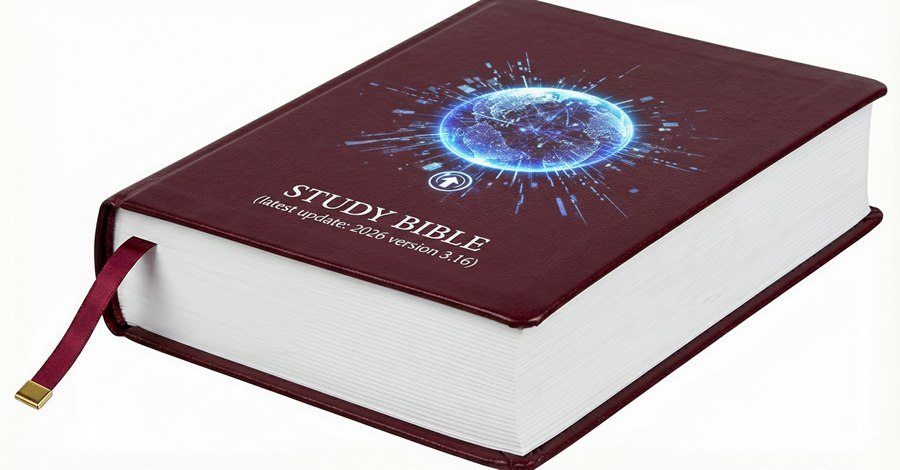
When did you last update your Bible, and does it matter?
I’ll provide a bit of both personal and translation history and then suggest that while you may or may not benefit from an update to the Bible you use now (or another one to read alongside it), your children and grandchildren might. More important than updating your Bible however, is hearing it speak to you, and allowing God to use it to renew your mind.
I first really read the Bible in 1989. I started with a New Testament provided by the Gideons that might have used the text from 1978. It has been updated several times since then.
I then tried reading the Old Testament, but the one I found in our house was a King James Version (not the originally 1661, because there were several updates and corrections so it was probably the 1769 Oxford edition. It was hard to read so I was glad to be able to find a more modern version.
The church I currently attend uses the NRSV UE – the New, Revised, Standard Version, Updated Edition).
It’s not my favourite version, but I do have a huge number I can use alongside it in English, and lots of those have been updated since they were first published. In my 30th year as a member of one of the many Bible translation organisations I’m very aware that there are languages in which translation of the Bible still hasn’t begun, but also that there are many people for whom a revision or new translation would be easier to understand and relate to.
People don’t always like changes to the text they are familiar with or new translations that sound different. Despite the reasons for the changes people don’t always trust them. I still like the NIV because that’s what I started with, but I also like other versions including the NLT and the CEV because they cause me to read or hear with new eyes and ears. (I also like audio versions of the Bible and am grateful for a range of voices as well as translations)
Perhaps in response to criticism of changes in some other English versions, in August 2016 the publishers of the ESV declared “the text of the ESV Bible will remain unchanged in all future editions printed and published by Crossway”, “in the same way that the King James Version (KJV) has remained unchanged ever since the final KJV text was established 250 years ago (in 1769)”
In what was to be the final revision they changed 52 words (out of more than 775,000)
“so that people who love the ESV Bible can have full confidence in the ESV, knowing that it will continue to be published as is, without being changed, for the rest of their lives, and for generations to come”
In late September the publisher made another bold move and reversed the decision and stated publicly, “We have become convinced that this decision was a mistake”
I applauded the decision.
“Our goal”, the publisher said, “remains as strong as ever to serve future generations with a stable ESV text. But the means to that goal, we now see, is not to establish a perm
anent text but rather to allow for ongoing periodic updating of the text to reflect the realities of biblical scholarship such as textual discoveries or changes in English over time.”
I share this story not to in any way criticise Crossway, but to commend them. Every Bible translation can benefit from and eventually require updating of the text
What Crossway had recognised when they proposed a permanent text, was that a lot of the time people don’t like their Bible to change, even when their language does, even if the new version is clearer to the current readers and more accurate.
In each of the 795 languages in which a full Bible exists, translators worked diligently and strived for a text that was not only free from error in the translation, but which would reduce error in interpretation, by using clear, understandable language.
The ESV translation committee acknowledged “that no Bible translation is perfect; but we also know that God uses imperfect and inadequate things to his honour and praise.”
In their 2013 guidelines of scripture revisions, the United Bible Societies, repeated a statement from 1961, “No translation of the Scriptures should ever be regarded as final, for the Bible must speak to every succeeding generation with undiminished clarity.”
Most revisions and new versions tend to come with explanations as to the decisions made. When the Good News version first came out, there was a whole book published to reassure readers and defend against critics. More recent translations tend to have a few notes in the preface and an article or two in the Christian press.
Historical versions were also met with criticism and distrust. The 1611 KJV, may have been authorised, but it doesn’t mean it was instantly trusted.
Can you trust the old text and the new?
Yes. Despite what some defenders of older translations say, neither the King James Version nor the Spanish Reina Valera, nor any other translation is perfect or final, and while some new proponents of new translations will criticise others most will recognise that any good translation is sufficient when it is understood – that is to say it accurately conveys all that it needs to. All of us can misread and misinterpret scripture either by accident or deliberate effort. A good revision or new translation provides clarity, accuracy, and naturalness, and most will contain footnotes to clarify further where needed.
Naturalness can help or get in the way. Should the Bible be in the language of the street or the formal language of a palace or courtroom? Your answer may depend on whether value sticking more closely to words or meanings and whether you see God as close and personal, or distant and unapproachably holy.
My understanding is that he is both. Jesus is our Lord and our friend, we become children of a loving heavenly Father, who happens to be the creator and sustainer of the universe. …and in which ever version of the Bible you prefer, you can find passages that point to both.
Be transformed by the renewing of your minds!
I was recently invited to preach on one of the passages about the transfiguration of Jesus.
Along with several important points about the uniqueness Jesus being revealed with a vision of glory, before the ugliness of the cross. I noted that the word translated “transfigured” is used in two other places – one in which we’re encouraged to be changed or transformed, and another in which we’re told we are being changed.
“Do not conform to the pattern of this world, but be transformed by the renewing of your mind. Then you will be able to test and approve what God’s will is—his good, pleasing and perfect will.” Rom 12:2 NIV , or if you prefer the phrasing in the NLT, “Don’t copy the behavior and customs of this world, but let God transform you into a new person by changing the way you think. Then you will learn to know God’s will for you, which is good and pleasing and perfect.”
2 Corinthians 3:18 translated in a variety of ways says that God’s glory is displayed in us and is changing us
So my main question isn’t just whether you should be seeking revisions or fresh translations of the Bible, but whether God is producing a new version of you.