
Best Practices

How to Tell a Dangerous Story


“I know how you can tell this story,” I said to a colleague with a smile. “Someone did something that made a positive change among some group of people in some country, and it’s so amazing everyone needs to know about it!”

We were talking about how to tell stories from “sensitive” or high-risk contexts, and I said this jokingly as we considered what could and could not be said in stories. We had a good laugh and proceeded to find a solution.

While I said this in jest, this is a basic formula for telling impact stories. Of course, usually when applied, it includes real information—not just “something” or “someone.” Yet, what do you do if putting these key details into your story threatens the project you want to write about or risks the lives of your subjects? Should these stories be left untold?
Read More »How to Tell a Dangerous Story

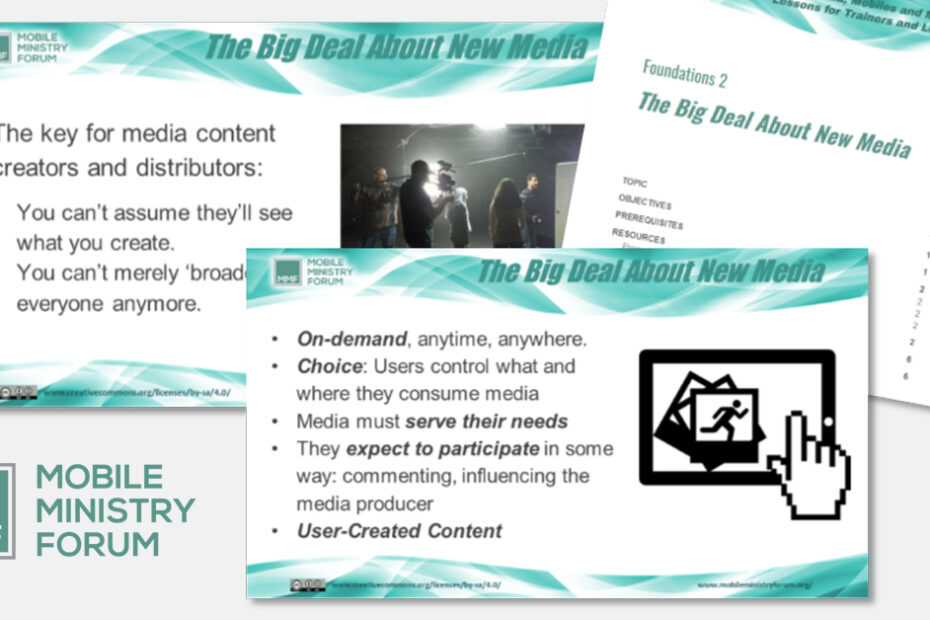
Mobiles, Media, and Ministry: Lessons for Trainers and Learners

The Mobiles, Media & Ministry: Lessons for Learners & Trainers curriculum contains 41 lessons, 360 pages of trainer guide materials, 70 pages of student handouts, and over 1,000 presenter slides.

The lessons are divided into four topic areas:

  1. Foundations of Media MinistryPrinciples and practices for developing media materials and strategy that lead to follow-up and discipleship.
  2. Mobile MinistryThe mobile phone is the device through which most media ministry efforts will be experiencedThese lessons teach the capabilities and limitations mobile technology provides and how to adapt your media ministry efforts.
  3. Social MediaThese lessons teach you to connect with the lost via social media so you expand your reach among almost any people you want to reach.
  4. Do-it-Yourself Media: These lessons teach anyone to create authentic, contextually-relevant media that can reach thousands.

Read More »Mobiles, Media, and Ministry: Lessons for Trainers and Learners