
This blog post is adapted from an AI-generated summary of the July 15 Literacy & Education CoP webinar.
What happens when literacy practitioners from around the world gather to tackle the big question: “How do we make our programs last?”
Spoiler alert: the answers are as diverse and creative as the communities they serve!
Our recent Community of Practice webinar brought together passionate educators, program leaders, and change-makers for an energizing discussion on sustainability.
But just what do we mean by “sustainability”?
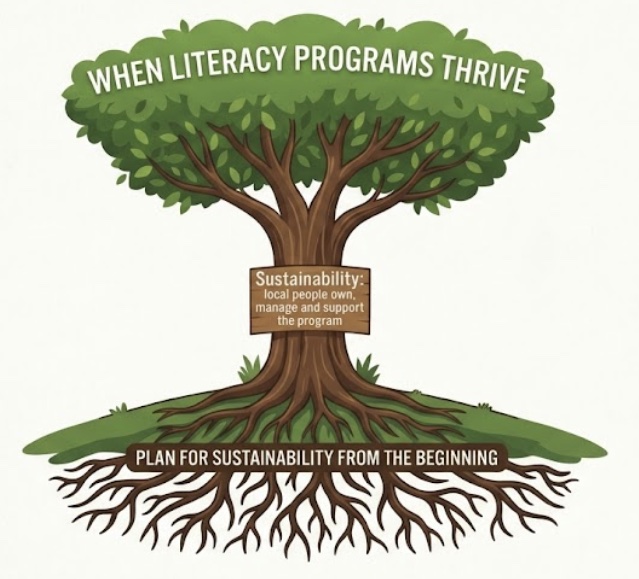
- A sustainable literacy initiative continues 5–10 years after donor funding ends because local people own, manage, and support it.
Helma Branger, a Literacy Consultant working with SIL in DR Congo, guided us through five key pillars that separate programs that fizzle from those that flourish.
- Ownership: There exists an organization, NGO, or community-based organization (CBO) within the community that assumes ownership of the literacy program.
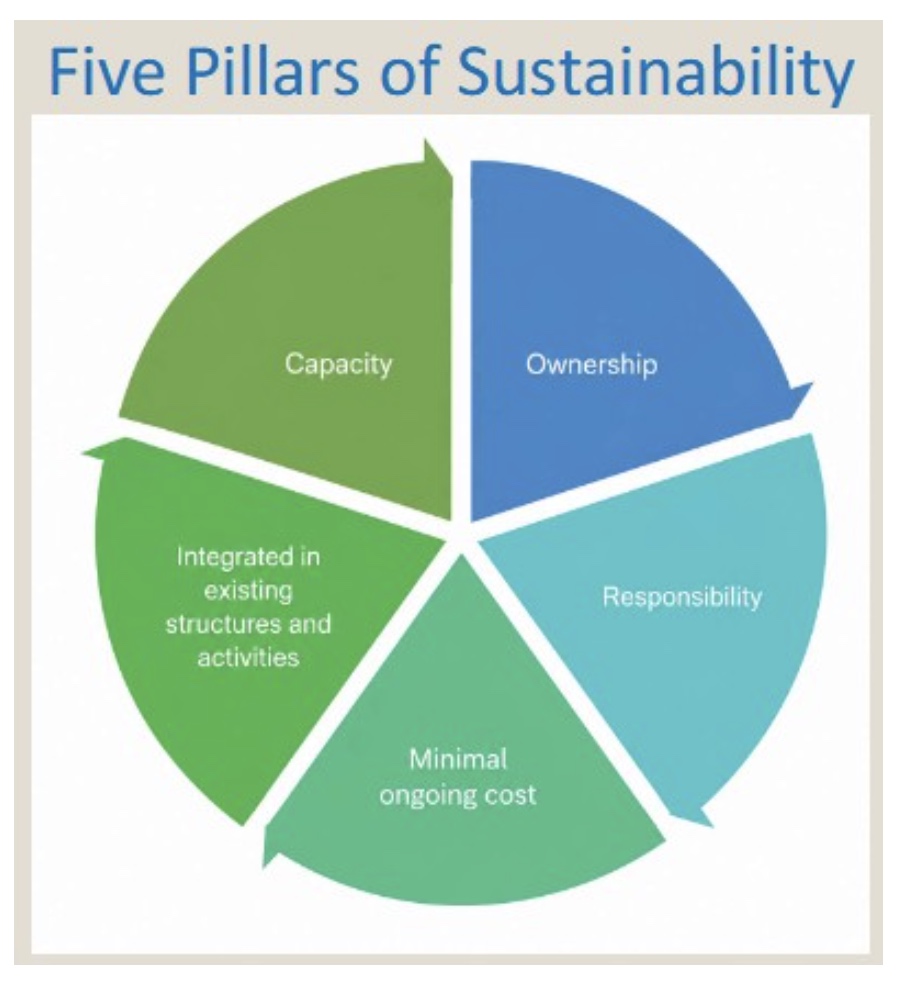
- Responsibilities: The community understands its responsibilities in ensuring the implementation and continuity of the literacy program. Moreover, the community possesses the necessary capacity—comprising knowledge, skills, and resources—to fulfill these responsibilities.
- Integration with existing structures and activities: The literacy program is integrated into existing community structures and activities, thereby leveraging and enhancing them with literacy components.
- Minimal ongoing costs: The ongoing costs associated with the literacy initiative are kept to a minimum. From the outset, the owner and other key stakeholders contribute to these costs, and there is a clear plan for covering them in the long term.
- Capacity: The owner and key stakeholders possess the requisite knowledge and skills to provide ongoing support for literacy initiatives.
The “Aha!” Moments from the webinar
- Ownership isn’t a handoff—it’s a starting point. The best programs begin with communities in the driver’s seat, not the passenger seat.
- Churches, committees, and champions emerged as sustainability superheroes in our breakout discussions. Who knew your local church structure could be a literacy program’s best friend? But experience shows that we need to be cautious about depending on a single “champion”!
- The train-the-trainer magic: Build local capacity, and you’re not just teaching people to read—you’re creating a movement that can teach itself.
So how do we do this?
Plan for sustainability from the outset:
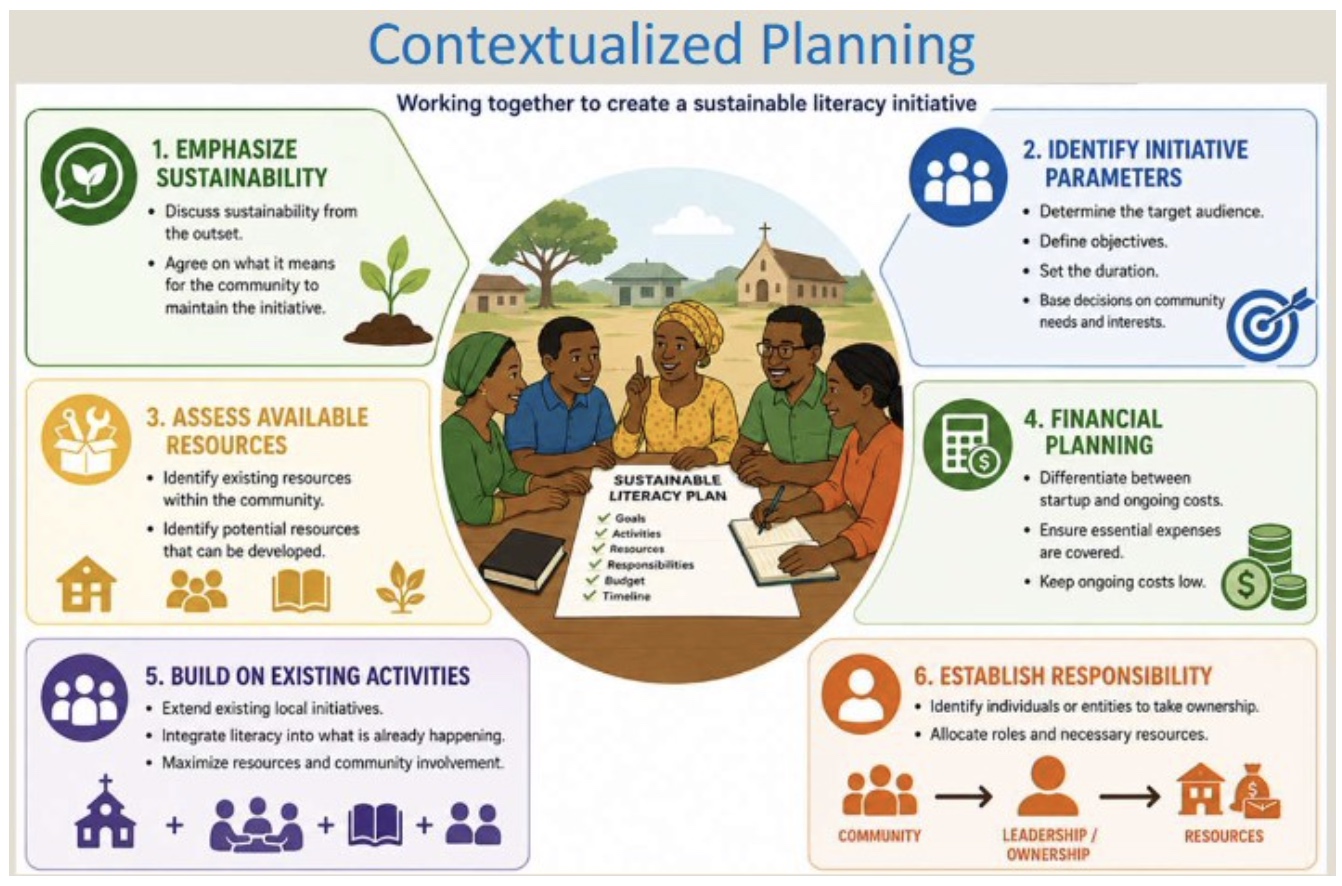 Emphasize sustainability from the beginning
- Identify parameters (target audience, objectives, duration)
- Assess available resources
- Financial planning (differentiate startup vs. ongoing costs)
- Build on existing activities
- Establish responsibility and allocate roles.
Real Stories from the Field: Through Padlet discussions and Mentimeter polls, participants shared honest struggles (funding gaps, conflict, motivation dips) alongside creative solutions they’ve discovered in their own contexts. The creativity was contagious!
The energy in both our East and West sessions proved one thing: when we learn from each other’s experiences, everyone’s programs get stronger. And yes, we’re already planning the sequel—this conversation is too good to be a one-time thing!
Want to dive deeper? Recordings and resources from both sessions are available on the EMDC platform.
- 15 July 2026 (East) – Building Sustainable Literacy Programs for Long-Term Impact
- 15 July 2026 (West) – Building Sustainable Literacy Programs for Long-Term Impact
You can also check out JeDene Reeder’s book on “Leadership in Literacy” where she explores some of these issues in an African context.
___________
Based on “Brief/Short Note on Sustainable Literacy Initiatives” (developed for Wycliffe Netherlands), by Agatha van Ginkel and Gerda Budding, May 2024.
Image generated by OpenAI’s ChatGPT / DALL-E using the prompt: “Create an image based on the information from the section ‘Steps to plan for a Sustainable Literacy Initiative’ from the Brief/Short Note on Sustainable Literacy Initiatives document.”
This blog post is adapted by Tanya Spronk, Jan Van Staalduinen and Helma Branger from an AI-generated summary of the July 15 Literacy & Education CoP webinar. Questions can be directed to Tanya Spronk